


Egyptian cotton is widely regarded as one of the finest and most luxurious types of cotton available globally. Here are its key characteristics:
  • Origin and Fiber Length: It is a specific type of cotton (Gossypium barbadense) cultivated primarily in the Nile River Valley in Egypt.3 This unique climate produces extra-long staple (ELS) fibers, which are significantly longer than those of regular cotton.
  • Softness and Strength: The long, fine fibers allow for yarns that are thinner, smoother, and stronger.5 This results in fabric that is exceptionally soft, has a silky feel, and is incredibly durable.
  • Durability: Due to the strength of the long fibers, Egyptian cotton items are known to last a long time and often improve in softness with repeated washing, unlike some other cottons that may pill or wear out.
  • Absorbency and Color: It is highly absorbent and holds dye exceptionally well, leading to vibrant, long-lasting colors in textiles.
  • Breathability: The fabric is naturally breathable and good at wicking moisture, which helps with temperature regulation.

In short

it is prized for its superior softness, strength, and longevity, making it a premium choice for high-end linens and clothing.

The two most common and highly regarded uses are for Bed Linens (Sheets, Duvets, Pillowcases) and Towels/Bathrobes.

1. Bed Linens 
This is arguably where Egyptian cotton is most famous.
 Why it's great for bedding: 
The extra-long, fine fibers allow for a very high thread count (often 300 up to 1,000+) without making the fabric feel overly heavy or stifling.
Key Benefit: 
It becomes softer and silkier with every wash, offering unparalleled sleeping comfort and durability that can last for decades. Its breathability helps regulate temperature, keeping you cool in summer and warm in winter.

 2. Towels and Bathrobes 
Egyptian cotton is considered the "gold standard" for bath textiles as well. 
Why it's great for towels: 
Its high absorbency means it soaks up water very effectively, drying your skin quickly. The long fibers can be twisted into thicker loops (higher GSM - Grams per Square Meter) which makes them luxuriously soft and fluffy.
 Key Benefit: 
Like sheets, Egyptian cotton towels often become softer and more absorbent the more you wash them, provided you care for them properly (e.g., avoiding fabric softeners).

 Other Uses 
Because of its strength and luxurious feel, it is also used for: 
High-end Clothing: Such as dress shirts or underwear, where softness against the skin is paramount.
Home Decor: Sometimes used for curtains or cushions where a rich look and long life are desired.

In essence, if you are looking for an item that you want to feel luxurious, last for a very long time, and even get better with use, Egyptian cotton is an excellent investment.

That's an excellent area to focus on! When you are buying Egyptian cotton sheets, Thread Count (TC) and the Weave are the two main factors that will determine how the sheets feel and perform.

1. Understanding Thread Count (TC) for Egyptian Cotton

Thread count is the total number of threads woven together in one square inch of fabric (counting both lengthwise/warp and widthwise/weft threads).

  • The Egyptian Cotton Sweet Spot: Because the fibers are naturally so long and fine, you don't need an astronomically high number to achieve luxury.
    • Good Balance (Comfort & Breathability): 300 to 500 TC is often the ideal range for Egyptian cotton. This provides a very soft, smooth fabric that is still breathable enough for year-round use.
    • Higher Luxury (Smoother & Heavier): 600 TC offers a noticeably smoother, more substantial, and luxurious feel, often favored for winter.
    • Be Wary of Too High: Counts above 800 or 1,000 are often achieved by twisting multiple lower-quality strands together (multi-ply yarn), which can make the fabric less breathable and sometimes weaker in the long run, despite the high price tag. Quality of the fiber matters far more than a massive number.

2. Understanding the Weave

The weave determines the texture, look, and temperature regulation of the sheet, regardless of the thread count. The two most common weaves for Egyptian cotton are Percale and Sateen.
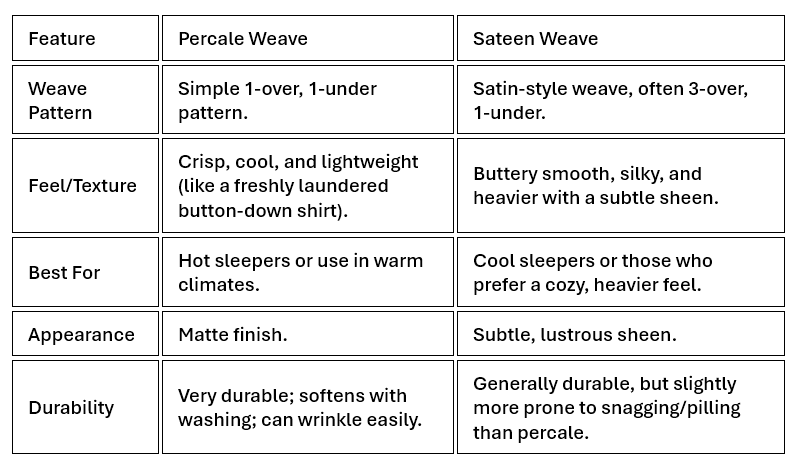
Summary for Choosing:

  1. For Cool Sleep & Crisp Feel: Choose Egyptian Cotton Percale with a thread count in the 300–500 range.
  2. For Warm, Silky Feel: Choose Egyptian Cotton Sateen with a thread count in the 300–600 range.

This balance ensures you get the true benefits of the high-quality Egyptian cotton fibers.